SOME KIN AIN'T BLOOD: A Women’s History Month Letter to the Women Who Made Me
I had a completely different newsletter planned for today.
Something lighter. Something cleaner. Something more “buttoned up.” Something that would’ve fit neatly into an inbox and asked a little less of me and you.
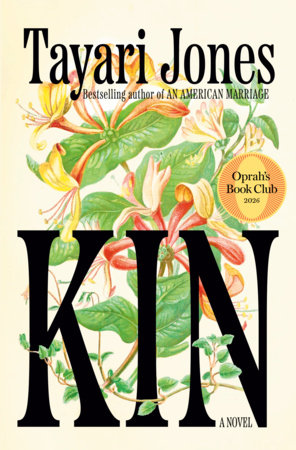
But last night—Tuesday, March 24, 2026—I finished reading Kin by Tayari Jones. And baby… that book sat me all the way down.
Not because it was loud or dramatic for drama’s sake. Not because it tried too hard... But because it told the truth. The kind of truth that sneaks up on you and sits quiet in the room while you’re reading and then, before you know it, has its hand wrapped around your throat and your heart at the same time.
I just finished the book last night and I spent the rest of my evening weeping.
So this newsletter is no longer what I planned. It has become a letter.
A letter to my mother. A letter to my cradle friend. A letter to my sisters. A letter to the women who shaped me, held me, disappointed me, loved me, and helped make me. And because this is the last newsletter I’ll send during Women’s History Month, I want to use it to honor them honestly.
A letter to the women who raised daughters while still trying to raise and rescue themselves. And because this is the last newsletter I’ll send during Women’s History Month, I want this one to matter.
So here it is.
This one is for Marie Ann McIntee.
For Lynn -my cradle friend.
For my sisters Mona and Chevina.
For Tayari Jones.
For Annie and Vernice.
And for every woman who has ever had to become kin to someone just to survive.
BEFORE I SAY ANYTHING ELSE... THANK YOU, TAYARI...
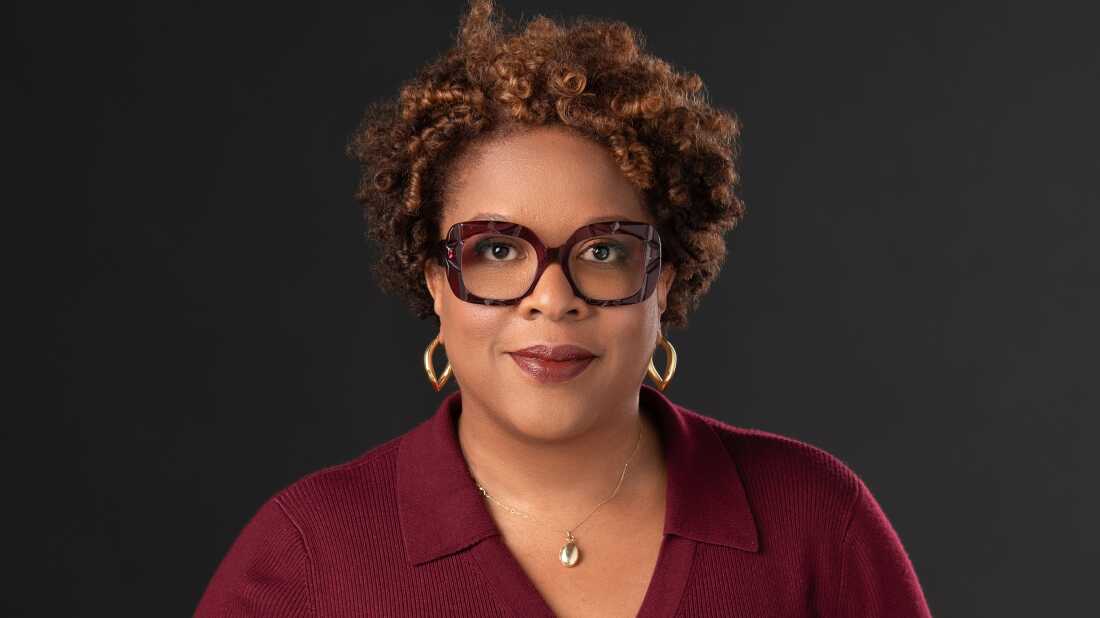
Thank you for writing a story so rooted, intimate, and emotionally precise that it reached across decades and found me sitting here today with tears still close to the surface and memories I didn’t realize were still waiting to be touched. Kin may be set in another era, but at its core it is about something timeless: girlhood, grief, chosen closeness, survival, and what it means when two girls recognize each other’s pain before either one of them has the language for it.
That part hit me in my chest.
Because I had that.
Her name was Lynn.
To Lynn, my cradle friend:
LYNN, I OWE YOU AN APOLOGY...
You were my cradle friend. Not my school friend. Not somebody I met later in life. Not one of those friendships you slowly grow into. I mean cradle friend—the kind of friend whose life is braided into yours before either one of you has any say in it.
Your name is Rosalyn, but to me, you were Lynn. My name is Cherlyn. And because our mothers were best friends, we came into this world already connected. Two -lyn(s). Most folks call me Cher now. We grew up more like cousins than anything else. That close. That familiar. That known.
And when I think about my childhood—not the polished version, not the version that gets easier to tell once enough years have passed, but the real version—you are in it everywhere.
You were one of the few people in my life who knew what it meant to grow up in the kind of instability we did. You knew what it felt like to be a little girl in the middle of grown folks’ pain. You knew what it felt like to be trying to survive things we were too young to fully understand.
And because we were little girls, we didn’t always know how to love each other cleanly.
I loved you, and I envied you at the same time.
That’s the part I almost skipped, but no—we’re telling the truth today.
I loved you, and I was jealous of you. I adored you, and sometimes I resented you. I felt safe with you and competitive with you. I needed you and didn’t know how to tell you that without also fighting you.
That’s what little girls don’t know how to say.
We were trying to understand scarcity, attention, tenderness, and survival while growing up in homes where softness was often interrupted by chaos. And because we didn’t have the language, it all came out sideways. We fought. We laughed. We judged each other. We protected each other. We irritated each other. We loved each other.
Like sisters.
And what I understand now, as a grown woman, is that there were things I thought made you luckier than me. In my child mind, there were moments when I thought your house had things mine didn’t—resources, support, something steadier, even if only sometimes. And because children compare what they can see and not what they cannot, I built stories in my head about who had it better.
But now I know better.
You were carrying your own ache too.
You were surviving your own version of abandonment too.
You were just a girl too.
And I’m sorry for every way I failed to understand that while we were living it.
One of the sweetest memories I have of us is that we used to dance.
Not perform. Not polished. Not for show. We danced because our bodies needed somewhere to put joy. Somewhere to put girlhood. Somewhere to put energy that had nowhere else safe to go.
We danced because for a few minutes, we got to be kids.
And if you know anything about children who grow up too fast, then you know how sacred that is. Some little girls do not get a long runway into innocence. Some of us become hyper-aware too early, too responsible too early, too emotionally literate too early. Some of us know too much too soon.
And dancing was one of the few places where we got to lay all of that down.
For a little while, we were not girls from hard homes. We were not girls with complicated mothers. We were not girls learning to care for ourselves too soon.
We were just girls.
And then there’s this part—maybe the part that matters most to the woman I am now:
I am an author in part because of you.
When we were around 13 and 14 years old, while life around us was doing what it was doing, we made up stories. Big stories. Romantic stories. Dramatic stories. Probably stories way too grown for the age we were. But baby, we had imaginations. And more than that—we had vision.
We created worlds that did not look like what we were living. We imagined love before we had seen enough healthy examples of it. We imagined possibility before we had any evidence of it. We stretched ourselves beyond the borders of our own reality.
Looking back, I realize now what we were doing.
We were not just playing.
We were practicing survival.
We were rehearsing escape. Building alternate futures. Trying on softness. Dreaming ourselves into something larger than what was happening around us.
And if life ever gives us the chance to speak again, I hope I get to tell you all of this directly.
Because if there is one person in this world who would understand parts of my beginning without me having to overexplain them, it would be you.
And that matters.
MAMA, I'M SORRY...
I grew up in the 80s and 90s, in the long shadow of the crack epidemic. Both of my parents were addicted to crack. And while I had a mother who was physically alive and physically present in some ways, there were many moments in my life where I still felt like a motherless child.
That is a hard sentence to write, but it is the truth.
To my mother, Marie Ann McIntee, I’m sorry for all the grace I did not know how to give you. I’m sorry for all the ways I only knew how to measure your love by your ability to function. I’m sorry for how often I judged your brokenness before I ever understood your humanity.
Because now that I’m grown, now that life has had its way with me a few times too, I see more than I did then.
I see that addiction was not the entirety of who you were. I see that broken women still love their children. I see that women can be deeply flawed and still deeply trying. I see that some mothers are drowning while still reaching.
Because motherhood is not just biology. It is not just presence. It is not just “she was there.” Motherhood is guidance, softness, correction, comfort, witness, safety, and being taught how to become.
And there were things I had to figure out too young. There were parts of girlhood I had to piece together on my own. There were moments when I needed you in ways I did not yet know how to name.
And because I didn’t know how to name that hurt, I called it anger.
One of the hardest memories for me to revisit is graduating basic training. I remember you and Daddy showing up, and I remember being embarrassed. Not because you didn’t come—but because you did. You both came visibly in the middle of your struggle. And at the time, all I could feel was shame, sadness, and anger.
And if I’m honest, Mama, I was especially angry with you.
I’ve had to sit with that. Why was I so angry with you?
Why did so much of my disappointment settle on the woman and not the man standing right there beside her in the same condition?
Why did I expect more from you? Why did I need more from you? Why did I hold you to a standard that addiction had already robbed you of being able to meet?
And I think the answer is painful, but simple:
Because when you’re a little girl, there is a particular kind of devastation that comes from needing your mother and feeling like she cannot get to you.
That wound is specific.
And for a long time, I carried it without naming it.
But what I can see now—what I could not fully see then—is this:
You still showed up.
In the middle of your own brokenness, you still showed up.
And maybe that is part of what womanhood has taught me: that women are often expected to carry impossible things and still mother perfectly through them. But women are human too. Women break too. Women fall apart too. Women are still trying to survive too.
And I think part of what I want to say in this Women’s History Month letter is this: Please, if you still can, give your mothers some grace.
Not because every mother did everything right. Not because every wound should be excused. Not because accountability doesn’t matter.
But because humanity matters too.
And I wish I had understood yours sooner.
I need to say this too: My father overcame his addiction.
And today, he is one of the strongest people in my life.
I am deeply proud of him.
Because recovery is not a small thing. Survival is not a small thing. Choosing your life back is not a small thing. And one of the quiet miracles of growing older is that sometimes, if you live long enough, you get to see people become who you once needed them to be.
Not always in time to erase the hurt.
But sometimes in time to witness the redemption.
And that matters.
So if I can leave you with anything today, especially as Women’s History Month comes to a close, it’s this:
Please reach out to your kin.
And I don’t just mean the people who share your last name.
Reach out.
And if you cannot reach out—if death, estrangement, time, or silence has made that impossible—then at least tell the truth about what they meant.
Honor them honestly.
Not with fake sainthood.
Not with polished revisionist history.
Not with pretend perfection.
But with truth.
Because the truth is enough.
The truth is that some women save your life imperfectly. The truth is that some women wound you and shape you at the same time. The truth is that some women are carrying so much pain that they cannot mother the way they mean to. The truth is that some daughters become women and only then begin to understand the women who raised them. The truth is that some friendships are holy, even if they don’t last forever in the form you wanted.
And the truth is this:
Some kin ain’t blood.
So this is my ode.
To Marie Ann McIntee—I see your humanity more clearly now than I did when I was young. I wish I had given you more grace while you were here. I hope this reaches you somehow anyway.
To Lynn—thank you for being my cradle friend. Thank you for dancing with me. Thank you for imagining with me. Thank you for helping me survive a childhood neither one of us should have had to navigate the way we did.
To Mona and Chevina—thank you for being my blood kin and part of the lineage of women that made me.
To Tayari Jones—thank you for writing the kind of book that does more than entertain. Thank you for writing the kind of book that reaches into women and says, Come here. Tell the truth.
To Annie and Vernice—fictional though you may be, you reminded me of what little girls can mean to each other when the world has already asked too much of them.
And to every woman reading this who has ever loved a mother imperfectly, missed a friend deeply, carried girlhood wounds quietly, or survived more than anybody realizes—
I honor you too.
Happy Women’s History Month.
May we tell the truth about the women who made us. May we grieve them honestly. May we love them deeply. May we forgive where we can. May we reach back when it’s time. May we give each other grace.
And may we never forget:
Some kin ain’t blood.
With love,