How to Travel Beautifully Without Overspending
Because a luxury price tag doesn't guarantee a luxurious experience.
I've traveled to more than 30 countries, stayed in some absolutely gorgeous properties, and had experiences that I wouldn't trade for anything in the world. I've also paid good money for accommodations that had absolutely no business charging what they charged. I'm talking recognizable hotel brands, impressive descriptions, and room rates that suggested I was about to be treated like somebody's wealthy auntie. Only to arrive and discover dated furnishings, underwhelming amenities, and, on one memorable occasion, water that smelled like it had its own unresolved issues.
Now, explain to me what exactly was luxurious about that.
Somewhere along my travels, I stopped allowing hotel ratings, recognizable brands, and expensive price tags to define luxury for me.
I believe in traveling beautifully. I love thoughtful service, comfortable accommodations, wonderful food, memorable experiences, and those little details that make me feel like somebody genuinely considered my presence. But I also believe in being intentional with my money. Those two philosophies are not mutually exclusive, regardless of how often the travel industry tries to convince us otherwise.
First, Let's Talk About What Luxury Actually Means
We've become accustomed to letting other people define luxury for us. Hotels sell us their star ratings, airlines promote their premium cabins, and social media would have us believing that unless there's a private infinity pool and somebody bringing breakfast on a floating tray, we haven't quite arrived.
But here's my question: arrived where, exactly?
Luxury is personal, and the things that make one traveler feel wonderfully taken care of might mean absolutely nothing to someone else. Is the service attentive? Is the bed comfortable? Is the location convenient? And if my plans change, am I going to lose a substantial amount of money because I booked the cheapest nonrefundable rate?
That last question matters to me. I'm perfectly willing to pay a little more for a reservation that allows me to cancel without penalty. Flexibility is something I value, so I factor it into my definition of a worthwhile booking.
Now, let's say I'm traveling to Paris. A hotel might offer me breakfast for an additional daily charge, and that could sound convenient. But Paris is full of boulangeries, neighborhood cafés, beautiful pastries, and wonderful coffee. Why would I automatically pay extra to eat breakfast inside my hotel when wandering down the street for a fresh croissant could become one of my favorite parts of the morning?
For someone traveling with small children, managing mobility limitations, or working with a tight schedule, hotel breakfast might be worth every penny. For me, it might be an unnecessary expense that also takes away an opportunity to experience the city.
Neither choice is inherently right or wrong. The point is understanding what matters to you before allowing someone else to package it, price it, and sell it back to you.
I Start With the Experience I Want, Not the Cheapest Option Available
When I'm researching accommodations, I do something that might seem a little backward to people who automatically associate smart spending with budget travel. I usually begin by looking at four- and five-star properties.
I want to understand what's available. What do the rooms look like? How is the property situated within the destination? What amenities are included? Is there a restaurant, a beautiful pool, a comfortable place to relax, or a concierge who can help me navigate the city? Most importantly, does the property support the kind of experience I'm trying to create?
I don't immediately eliminate an option because its published rate is higher than I'd prefer to spend. Instead, I start investigating how to get the experience I want at a price that makes sense.
That might involve loyalty points, comparing refundable and nonrefundable reservations, adjusting travel dates, looking at private residences instead of traditional hotels, or checking the unpublished member rates available through The Booked Club. Sometimes a beautiful property isn't financially reasonable, even after all that research, and I'm perfectly comfortable moving on.
There's also an important distinction between the advertised room rate and the total cost of staying somewhere. A less expensive hotel far from everything you want to experience can quickly become more costly once transportation, additional meals, and other necessities enter the equation. Meanwhile, a centrally located property with thoughtful amenities might offer considerably better overall value.
I've learned to evaluate the entire experience rather than celebrating a room rate in isolation.
My $482 Bali Budget: When Strategy Meets Experience
One of my favorite examples of this philosophy comes from my first trip to Bali in 2018.
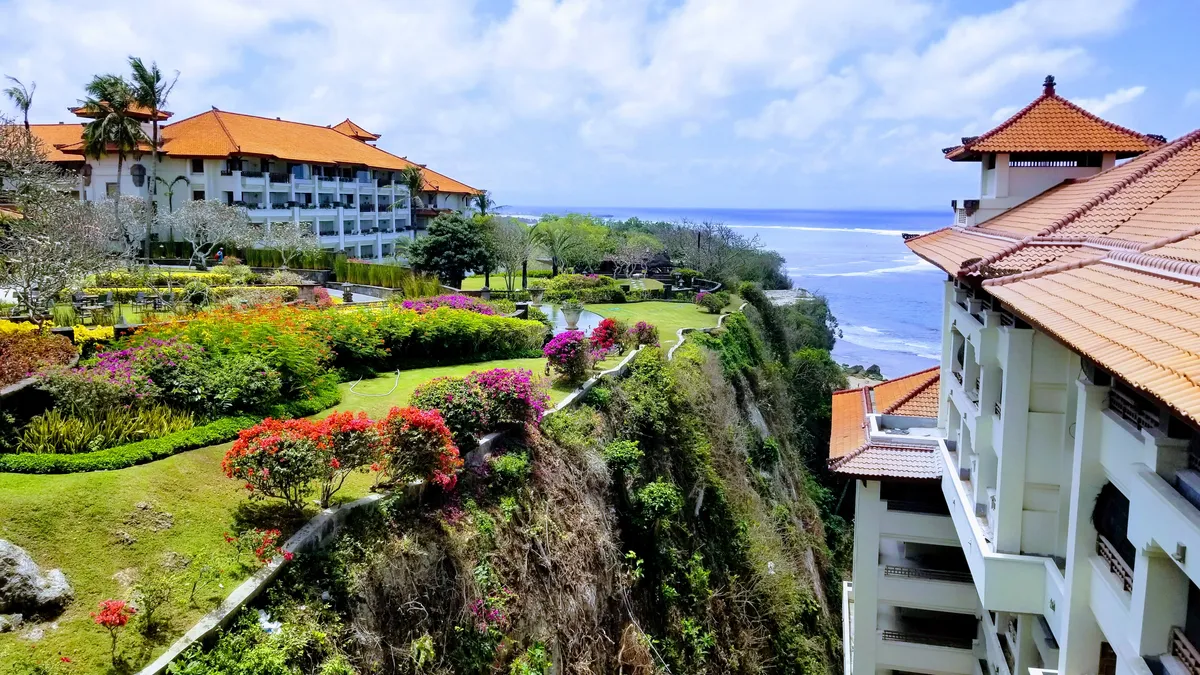
I spent ten days traveling, with nine days on the ground, and built the trip around a cash budget of approximately $482. My Delta airfare cost $112, and I spent absolutely nothing in cash on accommodations because I used loyalty rewards to stay at the Hilton Bali Resort and a Hilton Garden Inn property in the Kuta area.
My private driver cost approximately $70 for the week, and I allowed around $30 for attraction entry fees. For meals, I budgeted $30 per day, or $270 over nine days. That brings the planned cash allocation to $482, although I can't tell you that I spent every dollar of my food allowance. I actually carried $1,000 in spending cash and came home with most of it.
And let me tell you, I did not spend nine days in Bali sitting in my hotel room trying to avoid spending money.
I visited temples, explored Ubud, enjoyed the Sacred Monkey Forest, visited Tirta Empul and Uluwatu, wandered through markets, and spent glorious time on the beach. I ate at local warungs, enjoyed meals overlooking the water, and occasionally stayed right at the resort because some days I simply wanted to relax and enjoy where I was.
The trip wasn't free. My loyalty points had value, and the unusually low airfare was a significant part of what made that cash budget possible. I also wouldn't suggest that someone booking Bali today should expect to reproduce those exact costs.
What I want you to understand is the strategy. I used resources I'd already accumulated to cover accommodations that met my standards, then directed my cash toward experiencing the destination. I didn't sacrifice the vacation to satisfy the budget. I built a budget that supported the vacation I wanted.
And that distinction has shaped how I've traveled ever since.
Sometimes Your Greatest Travel Asset Is Someone You Met Along the Way
During that first Bali trip, I met a driver named Bagus. Over the years, I watched him grow professionally and eventually establish his own touring company. When I returned to Bali with a group of women, I reached out to him because I already knew the kind of experience he could provide.
Baby, that man had us booked and busy.
Over approximately six of our seven days, Bagus arranged transportation and an itinerary that included Bali Swing, Tirta Empul Temple, Ubud, the rice terraces, wonderful meals, and an incredible spa experience. Entry fees and many of our activities were included in the arrangement, which came to approximately $312 per person.
He planned so much that we eventually had to tell him we didn't need to do everything. At some point, even a beautifully curated itinerary needs to leave room for a nap and a little unstructured foolishness.
One of my favorite memories is him stopping at a local market to get us fresh mangosteen. That wasn't some extravagant five-star amenity, but it was thoughtful, personal, and rooted in a genuine connection with someone who knew his home.
I believe there's something extraordinary about developing relationships with people you meet while traveling. Those connections can introduce you to experiences, places, and perspectives you might never discover through a booking platform.
It's one of the reasons I've always believed that finding your people and becoming somebody's people are two different things. Sometimes the relationships you cultivate become among the most meaningful souvenirs you bring home.
Beautiful Accommodations Don't Always Come With a Hotel Logo
The way I approach accommodations changes depending on whether I'm traveling alone, with my partner, or with a group.
When I traveled to Guatemala with 19 family members, friends, and fellow travelers, we didn't need 19 separate hotel experiences. We needed a place where we could gather, relax, enjoy one another, and still have enough personal space to be comfortable.
We stayed at Hacienda Belén, a beautiful nine-bedroom residence in Antigua with an on-site housekeeper and inviting shared spaces. The property became part of the experience rather than simply somewhere to sleep between excursions.
Of course, sharing a private residence isn't right for every group. Privacy expectations, room configurations, accessibility, staffing, and everyone's comfort level matter. But when the arrangement fits, a beautifully appointed villa can offer a level of togetherness and personalized comfort that individual hotel bookings might not provide.
I shared much more about that experience, including our travelers' unfiltered opinions about what worked and what we'd approach differently, in What 19 Travelers Wish They Knew Before Visiting Antigua & Lake Atitlán, Guatemala.
On the other hand, my experience at Hotel Bardo in Savannah, Georgia, with my partner Sean reminded me that sometimes luxury is simply being treated exceptionally well.
From the moment we arrived, the staff made us feel expected and welcomed. They knew who we were, our room was ready, and they took the time to introduce us to the amenities and make sure we were comfortable. Those details created an impression that stayed with me.
I don't need someone performing luxury for me. But I do appreciate genuine hospitality, attentive service, and the feeling that my presence matters. A beautiful lobby means considerably less when the people running the property make you feel like you're inconveniencing them by showing up.
Consider the Whole Journey, Not Just the Reservation
As I'm planning my 50th birthday celebration for 2027, all of these considerations are coming together again.
I'm celebrating with a Virgin Voyages cruise through the Mediterranean, beginning in Athens and ending in Barcelona, with experiences across Greece, Italy, France, and Spain. And because I only turn 50 once, I'm being particularly thoughtful about how the journey comes together.
We're planning one night in Athens before boarding. I don't need to squeeze every historical landmark in the city into that short visit, especially since the cruise continues through Greece. What I do want is a comfortable hotel, a location that allows me to step outside and experience a little of Athens, and a smooth transition to the port the following day.
Barcelona presents another decision. Travelers can potentially fly home on the day we disembark, depending on their flight arrangements, or spend an additional night enjoying the city. I personally love the idea of allowing that fourth country to become more than a departure airport.
And yes, I'm having conversations with vendors, comparing arrangements, and working through the logistics. Some people consider planning the difficult part of traveling. I see it differently. There is something delicious about imagining an experience and slowly watching all the pieces come together.
Maybe that's the romance author in me. I love a good buildup, and I happen to think anticipation is part of the pleasure.
Travel Beautifully, but Make It Your Version of Beautiful
Traveling beautifully starts with knowing yourself. Before booking, understand what genuinely makes an experience worthwhile to you, research what's possible, and spend intentionally on the things that matter. Whether that leads you to a five-star resort, a private villa, or a little neighborhood café in Paris, the goal is the same: enjoy the experience you actually wanted.
Part of why I created The Booked Club was to give travelers another way to explore those possibilities through private member rates and travel benefits. It's one of the resources I use when evaluating accommodations, but it isn't a substitute for understanding what you actually want from a trip.
I've spent years writing Wanderlust Romance stories about women discovering themselves, finding love, and experiencing beautiful places around the world. What I've learned from my own travels is that the real-life version doesn't require somebody else's definition of luxury, and it certainly doesn't require spending money simply to prove that you can.
Because the most luxurious thing about traveling beautifully is being able to enjoy the experience you actually wanted, without regretting what you spent to get there.
Read the Story. Find Your People. Live the Experience.
— Cher Terais